Your Cart is Empty

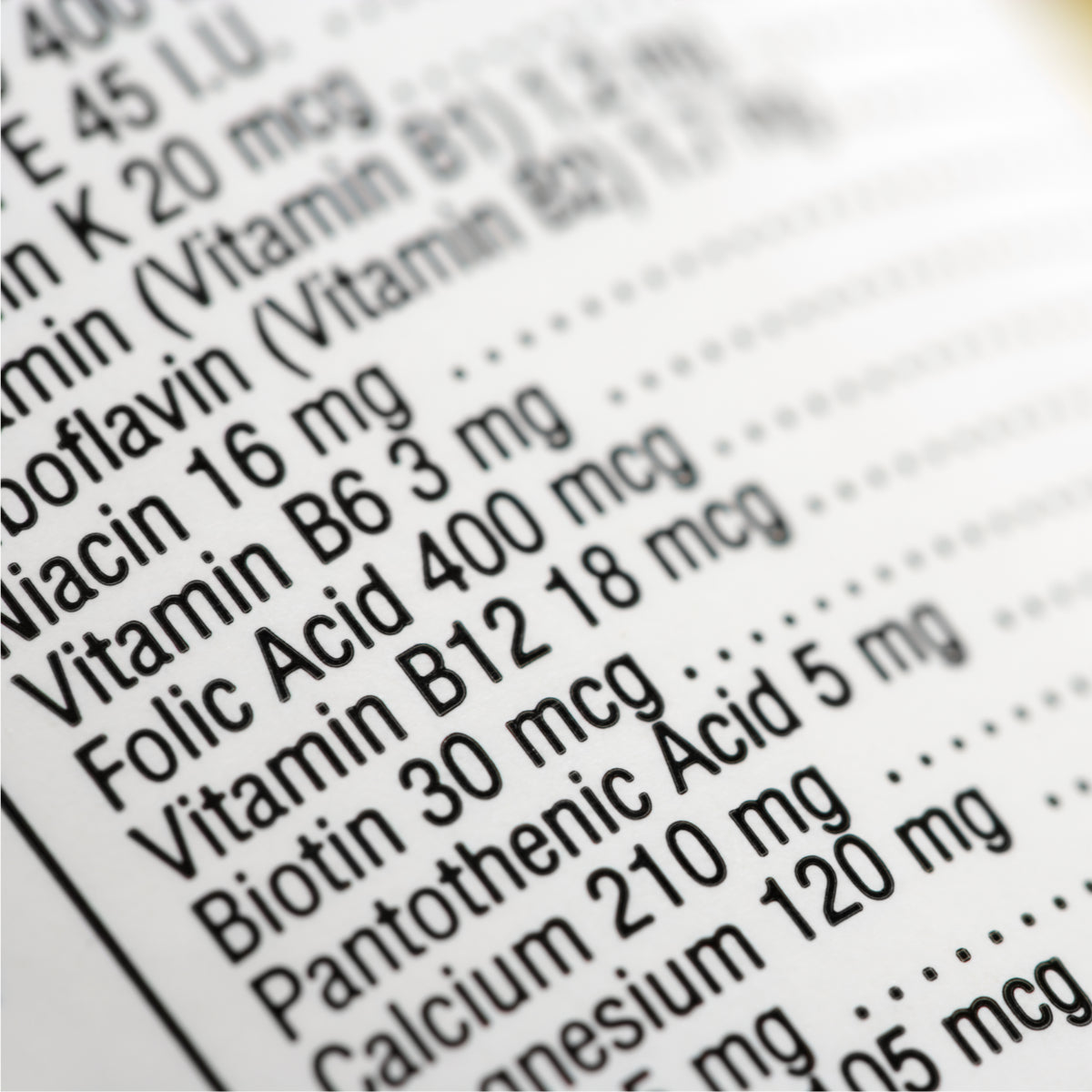
If you look at the nutritional information on the back of any supplement, you'll usually see a list of percentages relating to the NRV. NRV stands for Nutrient Reference Value — a guideline to the daily amount of a vitamin or mineral, set under EU/UK regulations. It was traditionally known in the UK as the Recommended Daily Amount (RDA).
The NRV is set by a panel of experts at a level that meets the requirements of about 97.5% of the population — in other words, the intake needed by healthy people to prevent deficiencies. The table below shows the Nutrient Reference Values for vitamins and minerals.
| Vitamin / Mineral | NRV |
|---|---|
| Vitamin A | 800mcg / 2664 IU |
| Vitamin D | 5mcg / 200IU |
| Vitamin E | 12mg / 17.9 IU |
| Vitamin K | 75mcg |
| Vitamin C | 80mg |
| Thiamine (Vitamin B1) | 1.1mg |
| Riboflavin (Vitamin B2) | 1.4mg |
| Niacin (Vitamin B3) | 16mg |
| Pantothenic Acid (Vitamin B5) | 6mg |
| Vitamin B6 | 1.4mg |
| Vitamin B12 | 2.5mcg |
| Biotin | 50mcg |
| Folate / Folic Acid | 200mcg |
| Potassium | 2000mg |
| Chloride | 800mg |
| Calcium | 800mg |
| Phosphorus | 700mg |
| Magnesium | 375mg |
| Iron | 14mg |
| Zinc | 10mg |
| Copper | 1mg |
| Manganese | 2mg |
| Fluoride | 3.5mg |
| Selenium | 55mcg |
| Chromium | 40mcg |
| Molybdenum | 50mcg |
| Iodine | 150mcg |
Is it safe to go above the NRV? The NRVs are reference amounts rather than upper limits, and for most nutrients it's safe to take more — though some vitamins and minerals do have safe upper levels worth being aware of. Needs can be higher in certain circumstances, such as during pregnancy or illness. It can help to think of the NRV as the baseline for preventing deficiency, with the body putting higher intakes to use up to an optimal level. If in doubt about a specific nutrient or dose, check with a pharmacist or GP.
Comments will be approved before showing up.