
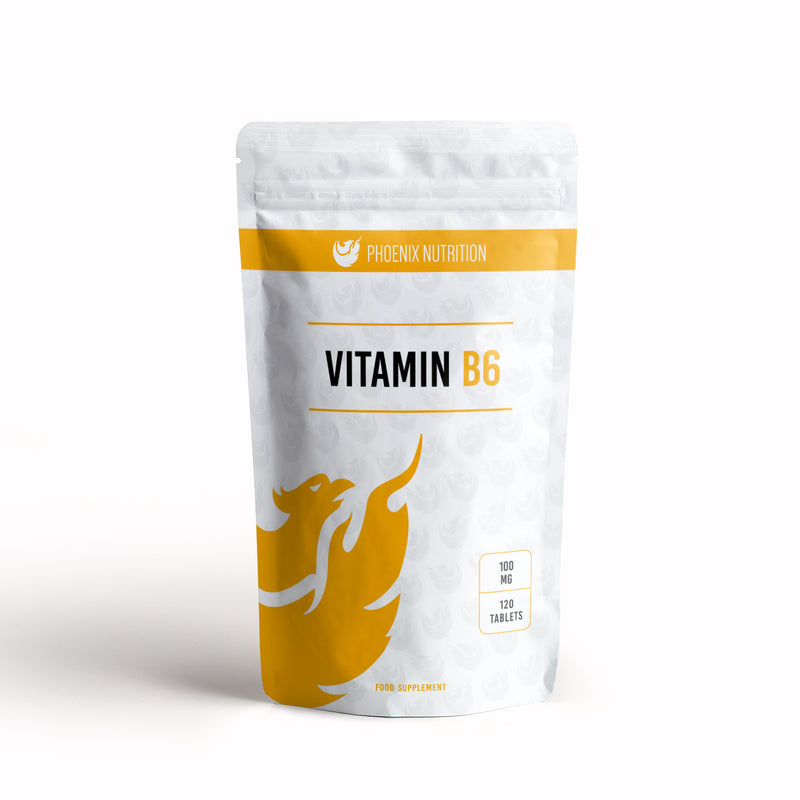
Vitamin B6 100 mg

  • 100mg of Vitamin B6 as pyridoxine hydrochloride per tablet
  • Required cofactor for the production of serotonin, dopamine, GABA and other neurotransmitters
  • Vitamin B6 contributes to normal psychological function
Description

Vitamin B6 is a water-soluble vitamin involved in over 100 enzyme reactions in the body, including those involved in protein metabolism and the synthesis of several neurotransmitters — serotonin, dopamine, GABA and noradrenaline among them.

Our tablets provide 100mg of Vitamin B6 as pyridoxine hydrochloride per tablet. Pyridoxine HCl is the most stable form of B6 and the form used in the majority of clinical studies on this vitamin. The body converts it into the active P-5-P (pyridoxal-5-phosphate) form through a process that requires riboflavin and zinc as cofactors.

Long-term high-dose B6 supplementation (typically above 200mg daily over extended periods) has been associated with peripheral nerve effects in some individuals. The UK Government's Scientific Advisory Committee on Nutrition guideline for prolonged use is below 10mg/day. This product is intended for shorter-term use; if you wish to supplement long-term, lower-dose B6 may be more appropriate.

Approved EFSA Health Claims for Vitamin B6:

  • Contributes to normal cysteine and homocysteine synthesis and metabolism
Nutritional Information
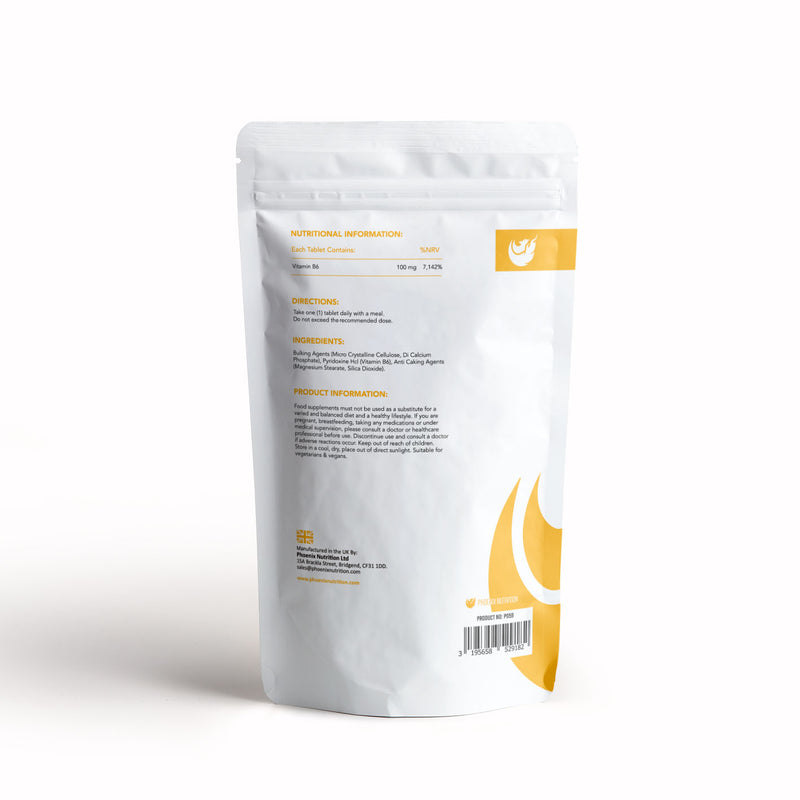
Each Serving (1 tablet) Contains:
Vitamin B6 100 g 7,142%
Ingredients
Ingredients: Bulking Agents (Micro Crystaline Cellulose, Di Calcium Phosphate), Pyridoxal Hcl, Anti Caking Agents (Magnesium Stearate, Silica Dioxide)

Directions
Take one (1) tablet daily with a meal. Do not exceed the recommended dose.

Suitability
✔ Non GMO
✔ Suitable for vegetarians
✔ Suitable for vegans
✔ Crustaceans free
✔ Egg free
✔ Fish free
✔ Peanut free
✔ Soy free
✔ Milk free
✔ Nut free
✔ Celery free
✔ Mustard free
✔ Sesame seed free
✔ Sulphur dioxide free
✔ Lupin free
✔ Molluscs free
Size

Are supplement

Are supplement "fillers" bad for you? A tablet manufacturer's honest answer

May 30, 2026

Magnesium stearate, silicon dioxide, microcrystalline cellulose and dicalcium phosphate are often labelled "nasties" by clean-supplement marketing. Here's what these excipients actually do, why a tablet can't be made without them, and the truth behind the magnesium stearate scare stories — from a company that presses its own tablets.
Read More
Active forms explained: why the form of a vitamin matters as much as the dose

Active forms explained: why the form of a vitamin matters as much as the dose

May 30, 2026

The number on a supplement label tells you the dose, but not the form — and the form decides how easily your body can use it. An honest look at methylcobalamin, L-5-MTHF, P-5-P, chelated minerals and MTHFR.
Read More
Pregnant woman outside, the health benefits of folate

What is methylfolate?

August 12, 2020

What folate does, where to find it in the diet, and the difference between folic acid and active methylfolate (L-5-MTHF) — including what MTHFR variations really mean.
Read More

Contact Us

Leave a message

Questions, comments or order inquiries? Please use the contact form and we respond as soon as we can.